

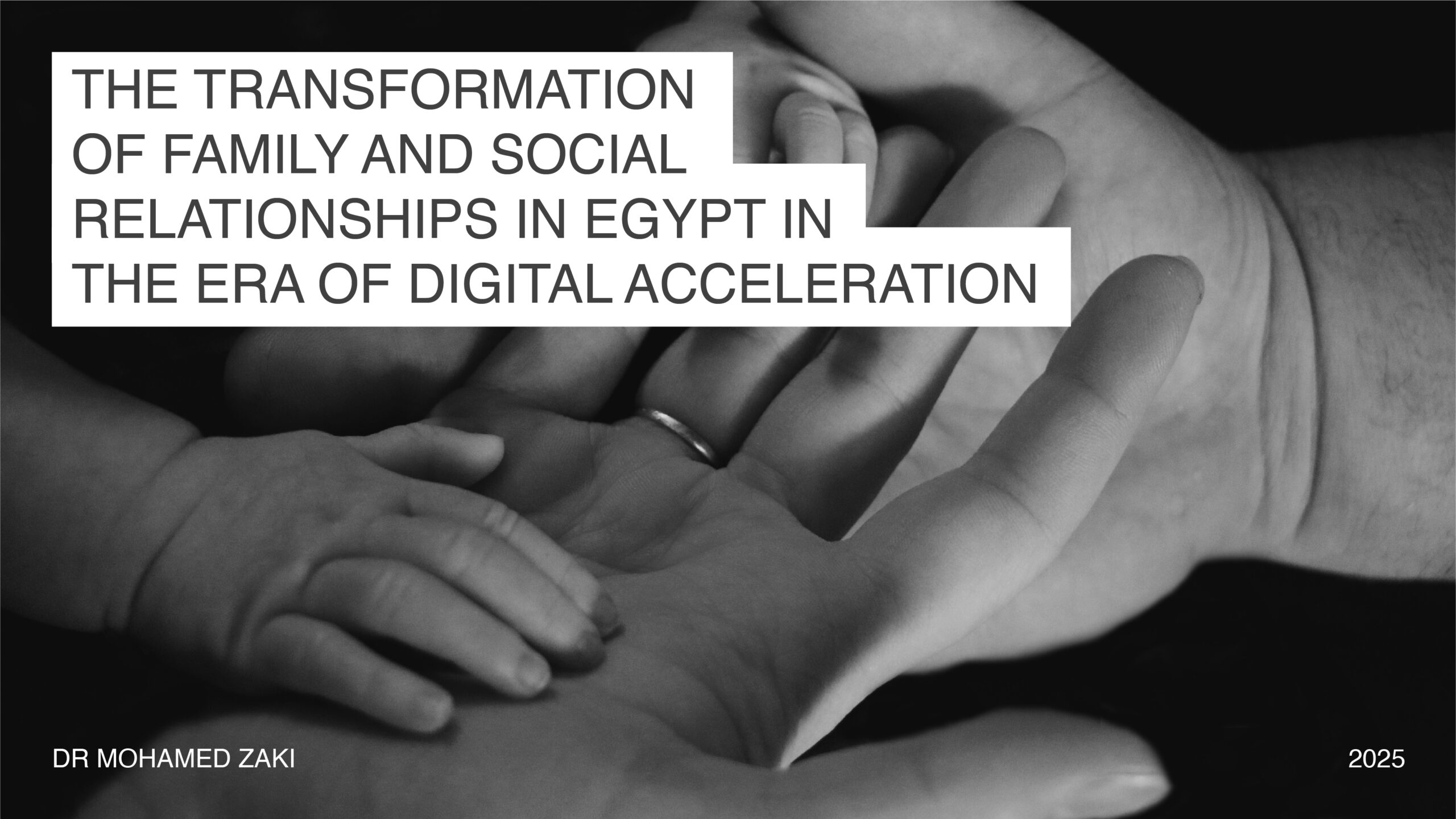
The Transformation of Family and Social Relationships in Egypt in the Era of Digital Acceleration
In recent years, the widespread use of smartphones and social media in Egypt has significantly altered patterns of communication and family and social relationships. Families and communities are no longer the primary reference points for psychological support and social upbringing; a substantial part of daily interaction among young people now depends on digital platforms, from instant messaging and calls to following the lives of others on TikTok, Instagram, and Facebook. While these digital transformations facilitate rapid access to information and communication, they also affect the quality of family relationships and create gaps between generations in understanding core values and social principles.
Traditional Egyptian families, once the cornerstone of support and guidance, now face difficulties in maintaining effective communication with their children. Long hours spent by young people on screens reduce the time available for family dialogue and shared activities, weakening the transmission of values and making youth more vulnerable to digital content, whether positive or negative. Studies indicate that over half of Egyptian youth spend four hours or more daily on social media, which limits real-world interaction and increases emotional isolation.
This digital dependence generates growing psychological pressures. Constant comparisons with others, following influencers, and immersion in curated or idealized content often create feelings of inadequacy and anxiety, affecting self-confidence. These pressures contribute to social withdrawal, weaker real-life communication skills, and even engagement in risky behaviors, such as imitating harmful online challenges or isolating from the actual community. Digital changes continuously reshape personal identity and make youth more susceptible to unconscious cultural influences affecting daily choices and fundamental values.
Economically, digital addiction has tangible effects. Constant consumption of digital content, attention to trends, and purchasing products or services advertised online increase financial pressure on families. Hours spent on screens also reduce productivity in studies and work, impacting both individual and family economic performance. However, the digital space offers new economic opportunities through e-commerce and freelance work, highlighting the dual nature of this phenomenon: significant risks if usage is uncontrolled, and growth opportunities if harnessed thoughtfully.
The broader community is also affected. Weak real-world communication among individuals reduces society’s ability to collectively address challenges and weakens traditional social bonds. Youth participation in volunteer and cultural activities is declining, while over-reliance on digital relationships increases feelings of isolation and decreases healthy social engagement. Exposure to distorted or irresponsible digital content can also promote harmful behaviors, such as verbal aggression or social discrimination, posing long-term threats to social cohesion and stability.
Addressing these challenges requires a comprehensive strategy that combines digital awareness, critical thinking education, and encouragement of real-life interaction across generations. Public policies must regulate technology use in ways that protect families and communities without hindering innovation or access to information. Psychological and community support programs are essential to manage pressures arising from excessive technology use, ensuring that youth can engage healthily with the digital world.
Ultimately, family and social relationships in Egypt face significant challenges due to digital transformation and rapid information exchange. Risks include weakening family ties, increasing psychological isolation, reduced economic productivity, and distortion of social values. With a well-rounded, conscious strategy, however, digital transformation can shift from a potential threat to a tool for enhancing social awareness, strengthening family bonds, and achieving a healthy balance between digital and real-life experiences.