Who Rules the World Now: Corporations or States?
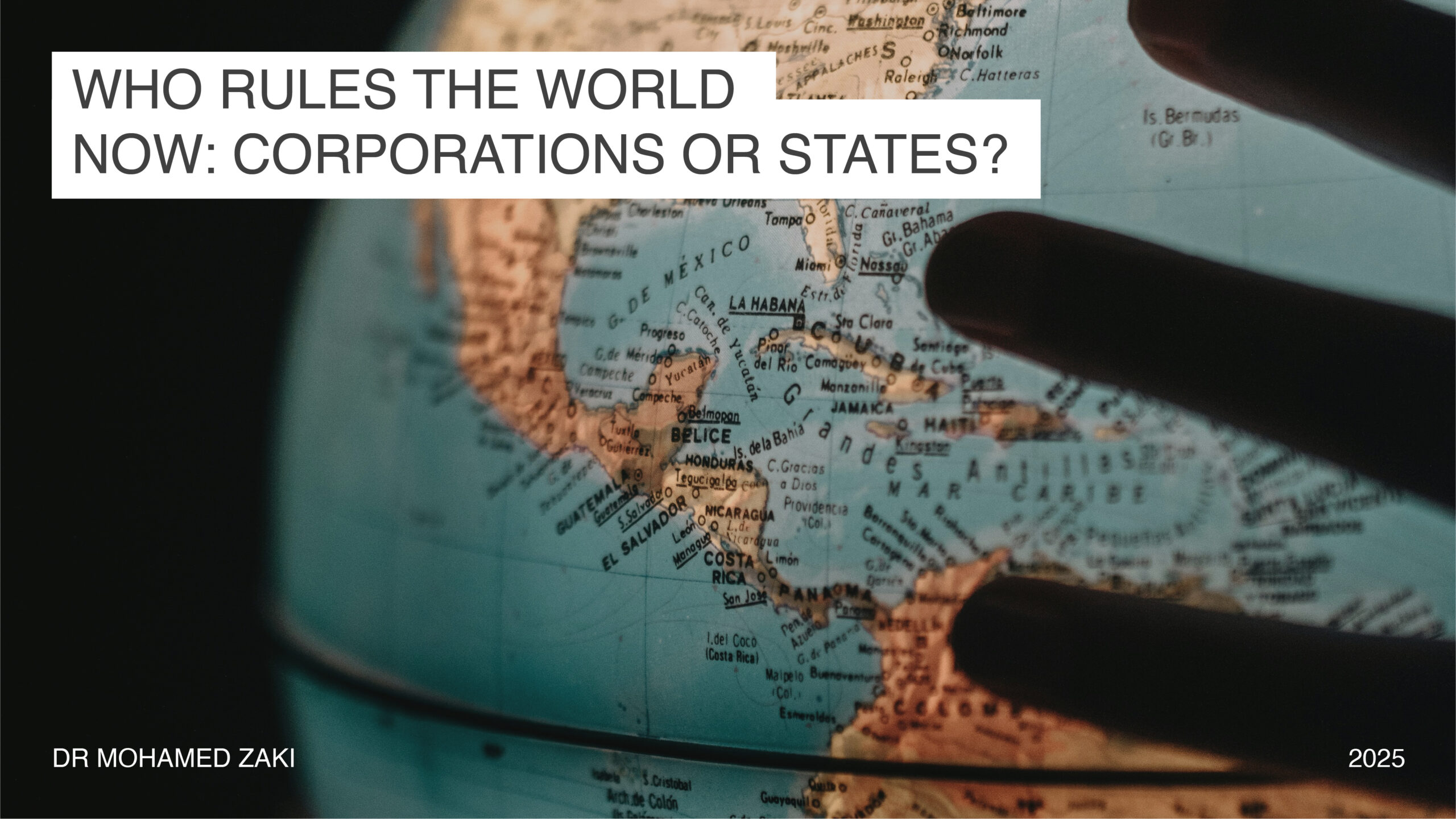
In a complex and interconnected world, multinational corporations and states compete for influence and the ability to shape the trajectory of the global economy and international politics. Authority is no longer confined solely to governments or international institutions; major corporations, with their immense financial power and advanced information technologies, have become influential actors in determining global policies, driving markets, and even impacting governmental decisions. This balance between corporate economic power and state political authority invites a deep analysis of who truly holds power in the twenty-first century.
Economically, major corporations possess financial resources that surpass the capabilities of some nations, along with tools to control markets, innovate technologically, and manage global production chains. Companies like Amazon, Google, and Facebook do not merely dictate market trends; they shape individual lifestyles, transform resource consumption patterns, and influence the economic policies of the countries where they operate. Their ability to harness big data, control information flows, and utilize artificial intelligence elevates them from traditional commercial entities to potent political forces with global reach.
From a legal perspective, questions arise about how to regulate such power, especially when its effects transcend national borders. Existing international laws were not designed to address commercial entities with extensive global influence, leading to legal gaps that can be exploited to achieve disproportionate economic and political advantages. This reality necessitates the development of international legislative frameworks that address the authority of major corporations, balance the interests of states and civil society, and simultaneously preserve market freedom while fostering innovation.
Public policy has become increasingly complex, as states rely on corporations to drive economic growth while seeking to maintain national sovereignty and influence global decision-making. The tension between corporate economic power and state political authority creates a new dynamic in international relations, where control over data, resources, and technology becomes the focal point of global influence struggles.
Ultimately, the world today exists in a fragile equilibrium between states and corporations, each wielding unique tools to assert dominance over the economy and politics. Who truly rules the world? The answer is far from simple; economic, legal, and political power is distributed among these actors in ways that require an integrated understanding of economics, law, and politics to fully grasp global power dynamics. As technology and the digital economy continue to evolve, this struggle will persist, making the question of who rules the world more complex and significant than ever before.