

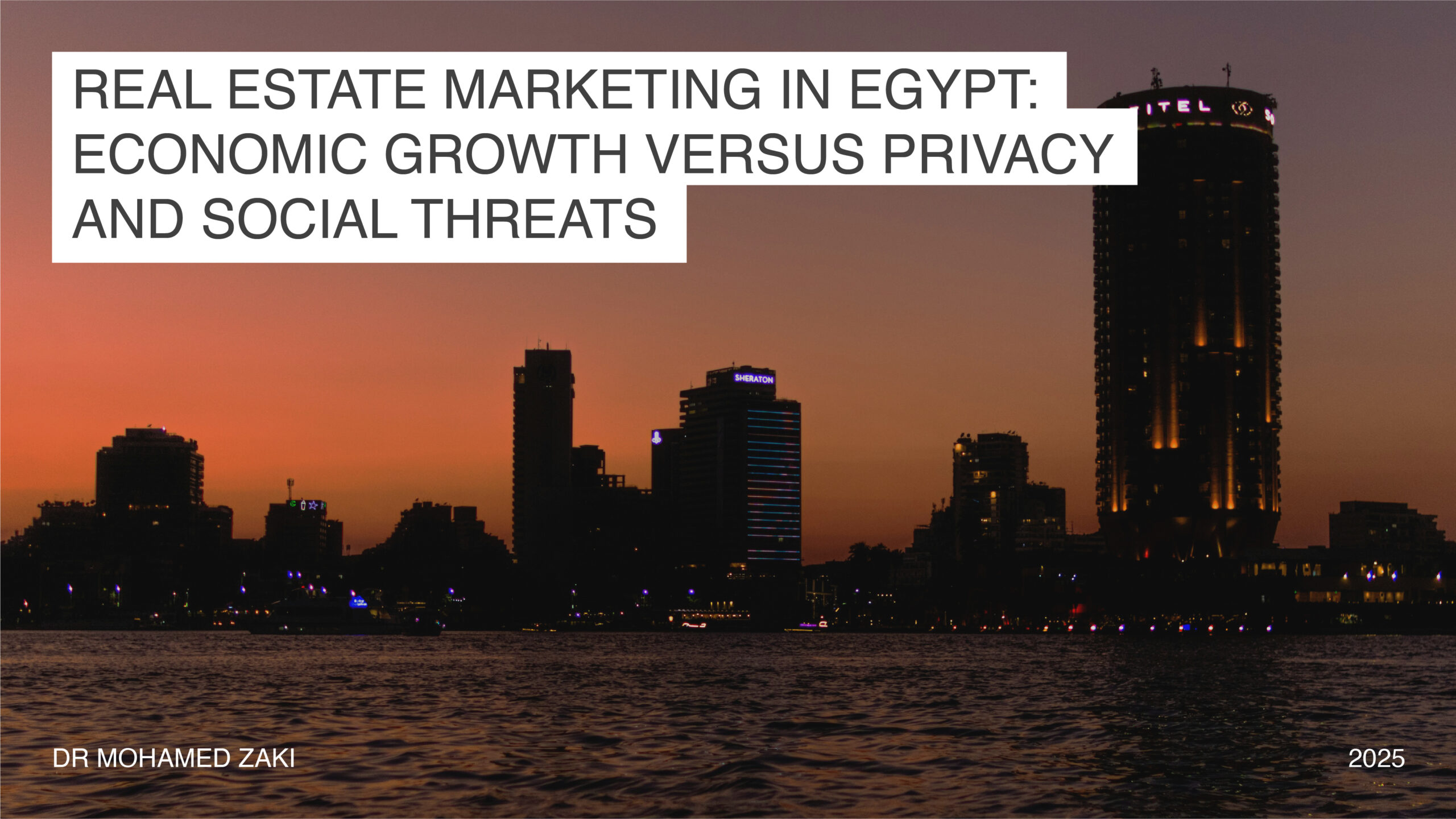
Real Estate Marketing in Egypt: Economic Growth versus Privacy and Social Threats
In recent years, Egypt’s real estate market has experienced rapid and unprecedented growth, driven by increasing demand for housing, urban expansion, and the emergence of marketing companies leveraging digital technologies. At first glance, this growth appeared to be an economic opportunity, boosting investment, creating employment, and stimulating related sectors such as construction, design, and logistics. However, what initially seemed like progress has gradually evolved into a phenomenon that poses significant risks to individual privacy, social stability, and psychological well-being.
One of the most visible issues is the sheer volume of unwanted phone calls and advertising messages. Ordinary individuals often receive dozens of calls daily from different real estate marketing companies, and these calls are frequently repetitive and relentless, creating significant psychological pressure and negatively impacting day-to-day life. These communications do not happen by chance; they result from the buying and selling of personal phone numbers, turning them into commodities traded among companies without the knowledge or consent of their owners. Consequently, every individual becomes a constant target for marketing pressure, living under persistent stress and with a sense of lost control over their personal information. Such practices affect personal focus, disrupt daily routines, and increase feelings of vulnerability in a world where “spam” has become a normalized part of communication.
The absence of regulatory oversight exacerbates the problem. Currently, there are no clear mechanisms governing the operations of real estate marketing companies, and no explicit laws protecting citizens’ data. The unrestricted sale of numbers, mass messaging, and uncontrolled use of personal information for promotional purposes occur freely. This legal gap places individuals in a daily struggle against powerful companies that operate without constraints, increasing frustration and eroding trust in digital markets. It also provides opportunities for unethical companies to exploit personal data for rapid profit at the expense of consumers, raising the risks of fraud, manipulation, and economic exploitation.
The economic implications of this phenomenon extend beyond the individual to the broader market. When consumers lose trust in real estate companies and digital platforms, fair competition diminishes, and the market becomes dominated by companies that exploit data aggressively. Such an environment encourages imbalanced growth and undermines transparency, making real estate investments risky for both consumers and investors. Moreover, the relentless advertising pressure influences financial decision-making, pushing some individuals to purchase properties or commit to projects without proper evaluation, purely under marketing pressure.
The social and psychological dimensions of this issue are equally serious. The constant barrage of calls and messages generates chronic stress, affecting family dynamics and work-life balance. Individuals often face these pressures at home or in professional settings, leading to continuous fatigue and anxiety. Additionally, the widespread use of aggressive marketing strategies fosters a societal divide between those who engage with the digital market and those who seek to avoid it due to fear of data exploitation, weakening social cohesion and increasing collective stress.
Despite Egypt entering a phase of digital advancement and economic growth, the lack of strict legislation and enforcement transforms these practices into a pervasive social “disease.” Companies operate without limits, governmental oversight is minimal, and effective privacy protection is largely absent. This reality leaves citizens constantly under pressure, while companies exploit legal gaps to generate quick profits, endangering both individual privacy and collective societal trust.
Addressing this crisis requires an integrated approach, including the establishment of clear laws to protect privacy, the imposition of strict penalties on violating companies, and the activation of regulatory mechanisms to ensure adherence to ethical and professional standards. Additionally, society must undergo awareness campaigns aimed at educating individuals on protecting their personal data, limiting excessive promotional interference, and using technological tools to control marketing communications. Responsible companies can adopt transparent marketing policies that respect customer privacy and foster trust, transforming the real estate market from a high-risk environment into a balanced and sustainable economic sector.
Ultimately, real estate marketing in Egypt represents a complex intersection of economic opportunity and social threat. Aggressive marketing practices and the absence of data protection turn economic potential into real societal hazards, impacting privacy, mental health, and social relationships. The community faces a substantial challenge that demands immediate legislative, regulatory, and technological interventions to achieve a sustainable balance between digital innovation, economic growth, and the protection of individual and societal rights.